


Contentsexpand_more
- E-Max Crowns: The Secret of a Natural Smile with Lithium Disilicate
- What Are E-Max Crowns?
- Advantages of E-Max Crowns
- Disadvantages of E-Max Crowns
- The Difference Between E-Max Press and E-Max CAD
- The Difference Between E-Max and Zirconia Crowns
- Which Teeth Are E-Max Crowns Applied To?
- E-Max Crown Treatment Process
- The E-Max Difference at Livera Clinic
- E-Max Crown Prices: Turkey vs. United Kingdom
- The Difference Between Porcelain Veneers and E-Max
- The History and Technological Development of E-Max Crowns
- How Is E-Max Colour Selection Performed?
- Care After E-Max Crowns
- Life After E-Max Crowns: Our Patients' Experience
- Who Cannot Have E-Max Crowns?
- Common Misconceptions About E-Max
- Frequently Asked Questions
- Process for International Patients
- Conclusion: Your Natural Smile Is One Consultation Away
E-Max Crowns: The Secret of a Natural Smile with Lithium Disilicate
Imagine a smile you love to show off when you look in the mirror. Teeth that reflect light just like natural enamel, with no artificial shine even on close inspection. E-Max crowns, the most talked-about material in aesthetic dentistry of the past decade, represent the technology that makes exactly this result possible. Based on a lithium disilicate ceramic core, this system delivers results so realistic that they are virtually indistinguishable from natural teeth, thanks especially to the translucency achieved in the anterior region.
In this comprehensive guide we will examine in detail what E-Max crowns are, how they are produced, how they differ from zirconia, which teeth they are suitable for, and the standards at which Livera Clinic Florya performs this procedure. You will also see the real figures behind the price gap between Turkey, the UK and Europe.
What Are E-Max Crowns?
E-Max is a full-porcelain restoration system based on lithium disilicate (Li₂Si₂O₅) glass-ceramic, developed by the Swiss manufacturer Ivoclar Vivadent. The "E" stands for "esthetic". With its metal-free, monolithic single-piece structure, this material mimics the optical properties of natural teeth and can be used as laminate veneer, full crown and inlay/onlay in the anterior region.
Lithium disilicate ceramic is approximately three times stronger than traditional feldspathic porcelains. Its flexural strength ranges between 400 and 500 MPa. This figure shows that the material can comfortably withstand daily chewing forces. At the same time it has a light transmission compatible with the natural enamel layer of the tooth, which makes E-Max the gold standard of the aesthetic zone.
What Does E-Max Mean?
It is sometimes referred to by names such as "porcelain crown", "full-ceramic crown" or "Empress crown". Empress is Ivoclar's older-generation leucite-reinforced ceramic product; E-Max is its technologically advanced successor. In clinical practice the spelling "Emax" is also common, and both describe the same system.
Advantages of E-Max Crowns
When applied to the right indication, E-Max offers patients significant advantages both aesthetically and clinically. At our Florya clinic we have placed over a thousand E-Max restorations in the last three years, and the features most appreciated in the field can be summarised as follows.
- High translucency: It transmits light like natural enamel, so the border between the crown and the natural tooth becomes invisible.
- Metal-free: Even if the gums recede no grey line forms, and the risk of allergic reaction is eliminated.
- Minimal tooth preparation: In laminate form, a preparation of 0.3 mm to 0.5 mm is sufficient, preserving most of the tooth structure.
- Colour stability: It does not yellow or stain over the years and is more resistant than natural teeth to coffee, tea and red wine.
- Biocompatibility: It works in harmony with the gingiva and does not compromise periodontal health.
- Precise marginal fit: Press or CAD/CAM techniques achieve micron-level marginal adaptation, minimising the risk of caries.
- Excellent polishability: Surface smoothness reduces plaque accumulation.
Disadvantages of E-Max Crowns
No material is suitable for every clinical situation. E-Max also has limitations that must be considered. It would be incorrect to plan treatment without informing the patient of these.
- Not used in very long bridges: Zirconia should be preferred in bridges longer than three units. The flexural strength of E-Max may be insufficient in the posterior section of the bridge.
- Risk in severe bruxism cases: The probability of fracture increases in patients who grind their teeth heavily at night. A night guard is mandatory for these patients.
- Difficulty masking discoloured teeth: Because of its translucency, colour may show through if there is a very dark tooth underneath. In such cases an opaque substructure or zirconia may be a more accurate choice.
- Cost: It is a higher investment than traditional metal-supported porcelain, but the lifespan and aesthetics more than compensate for this.
The Difference Between E-Max Press and E-Max CAD
The E-Max system has two main production methods. Which one is chosen depends on the characteristics of the case, the equipment of the clinical laboratory, and the desired aesthetic detail. Our in-house laboratory at Livera Clinic Florya is equipped to apply both techniques.
E-Max Press Technique
In the press technique, a lithium disilicate block is pressed under high heat and pressure into the place of a wax model. This method is particularly preferred for thin laminate veneers. The artistic craftsmanship of the dentist and technician comes into play, and characterisation and colour transitions can be done much more delicately. In single-tooth aesthetic cases, the press technique generally produces more natural results.
E-Max CAD/CAM Technique
In the CAD/CAM method, a digital impression is taken, the restoration is designed in computer software and milled from a block by a milling machine. Production time is much shorter, making same-day delivery possible. CAD/CAM gives very successful results in single crowns or short bridges, especially in the posterior region. Reproducibility is high thanks to the digital workflow.
The Difference Between E-Max and Zirconia Crowns
One of the most frequent questions our patients ask in the clinic is "E-Max or zirconia?". Both are in the full-porcelain class, but their basic material structures and areas of use differ. Putting the comparison in a table makes it easier to decide.
| Feature | E-Max (Lithium Disilicate) | Zirconia (Zirconium Dioxide) |
|---|---|---|
| Flexural strength | 400 to 500 MPa | 900 to 1,200 MPa |
| Translucency | Very high, identical to natural enamel | Medium, improved in newer generations |
| Aesthetic success | Gold standard in the anterior region | Superior in posterior and long bridges |
| Amount of tooth reduction | 0.3 to 0.5 mm (laminate) | 1 to 1.5 mm (crown) |
| Bridge capacity | Maximum three units | Safe even in long bridges |
| Ideal use | Anterior teeth, premolars, laminates | Molars, on implants, long bridges |
| Colour stability | High | High |
The practical rule is this: E-Max is preferred for the aesthetic zone, that is the front six or eight teeth on the smile line, while zirconia is preferred for the posterior teeth where chewing force is high and for bridges with more than four units. In many patients both materials are used together, which is called a "hybrid restoration". For a detailed comparison you can read our zirconia crowns page.
Which Teeth Are E-Max Crowns Applied To?
The main strength of E-Max is in the aesthetic zone. The front six teeth of the upper and lower jaw form the smile line; light transmission is very important in this area. For this reason E-Max is the first choice in the cases listed below.
- Anterior laminate veneer applications
- Single-tooth crown restoration (in the anterior and premolar region)
- Full aesthetic transformations such as Hollywood Smile
- Aesthetic repair of discoloured teeth with old composite fillings
- Resizing of teeth with shape defects, short or worn teeth
- Closure of diastema, that is gaps between teeth
- Dark-coloured teeth due to tetracycline use (assessed on a case-by-case basis)
It also performs well when applied as a single large crown in the posterior molar region, but zirconia is a safer choice for very long bridges. For full-mouth aesthetics you can see the case examples on our Hollywood Smile page.
E-Max Crown Treatment Process
The right result starts with the right process. At Livera Clinic Florya, E-Max crown treatment is completed on average in four to five sessions. For our patients coming from abroad we plan this period over seven to twelve days, and a 5-star hotel stay in Istanbul together with VIP transfer is included in the package.
1. Consultation and Detailed Examination
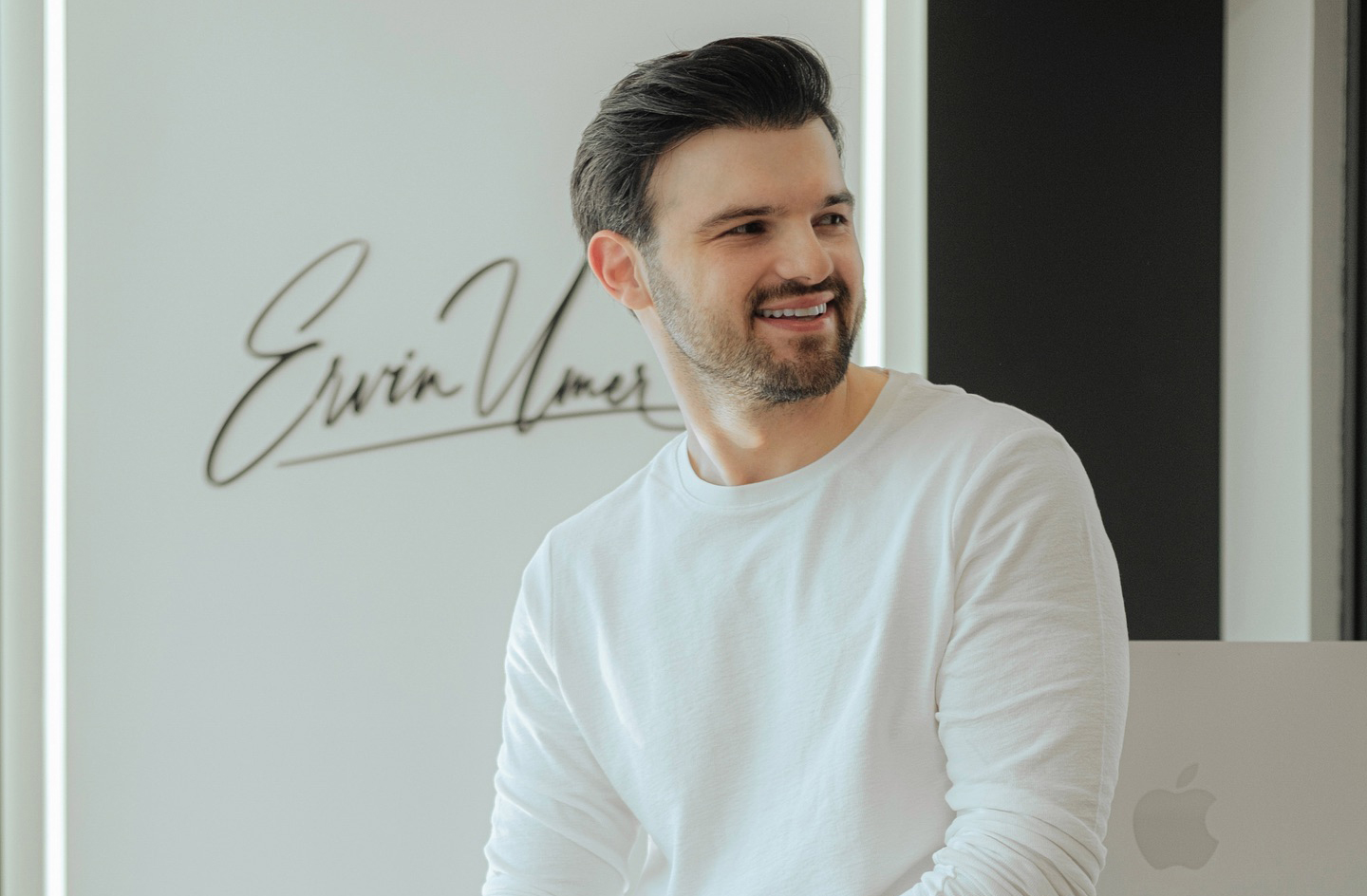
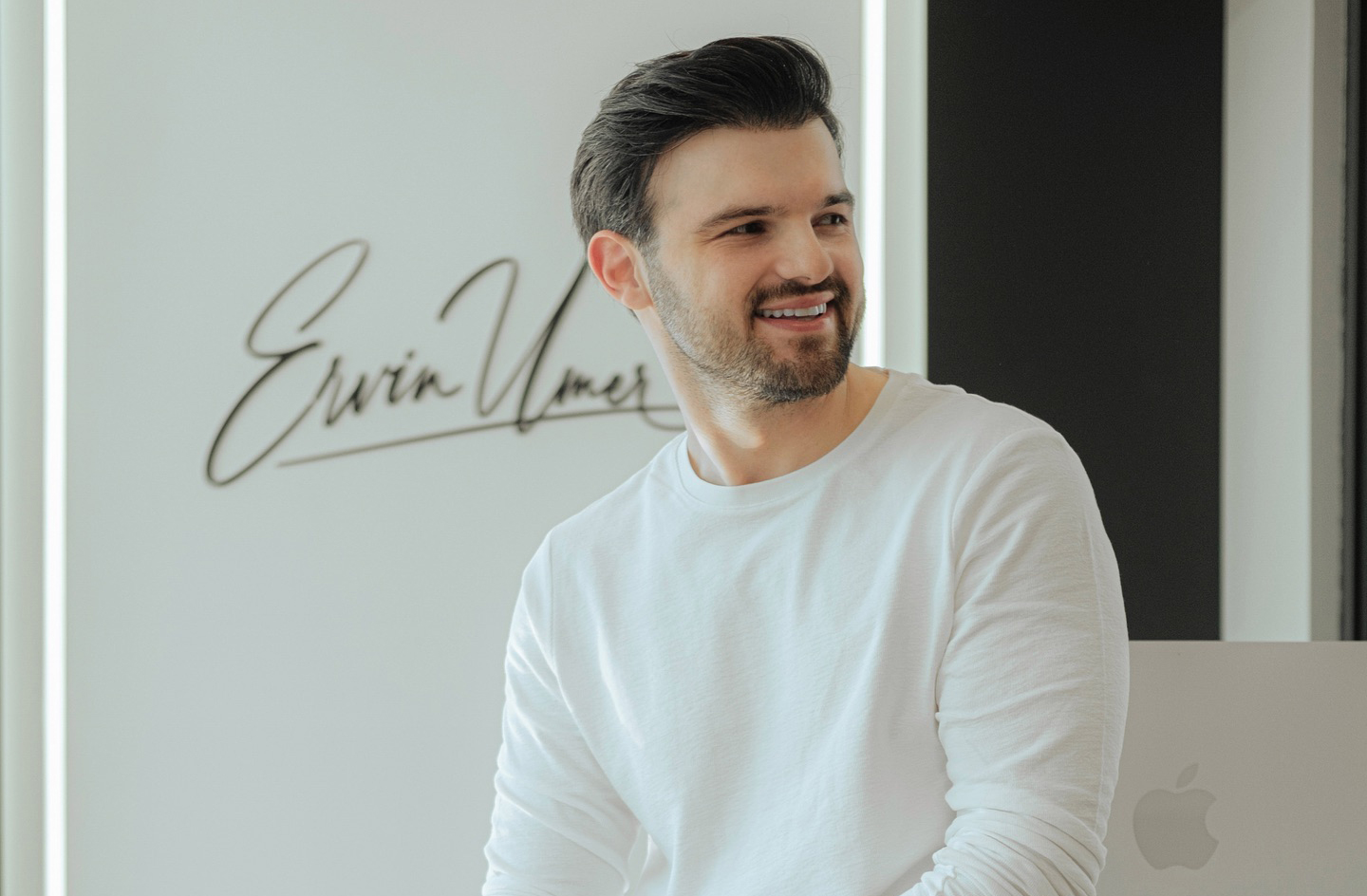
The first session is a comprehensive clinical examination performed by Dr. Ervin Umer. Periodontal health, caries status, occlusal relationship, bone level and aesthetic expectations are evaluated. A panoramic X-ray and digital intraoral scan are performed. The patient's facial symmetry, lip line and smile line are analysed. Expectation analysis is the most critical step of the process, and pre-planning is what prevents the outcome from becoming a disappointment.
2. Digital Smile Design
A digital preview of the new smile is prepared from facial photographs and intraoral scans. The patient is shown "this could be your smile" on the computer screen. Suggested changes are reviewed and adjusted at this stage. For details you can read our digital smile design page.
3. Mock-Up Trial
The wax model generated from the digital design is applied directly into your mouth in temporary material. When you look in the mirror you can experience how your teeth will really look for hours. If necessary, forms, lengths and widths are revised at this stage. This step is the essence of the Livera difference; we never prepare teeth without first validating the design through the patient's eyes.
4. Tooth Preparation and Impression Taking
After the mock-up is approved, the teeth are prepared under local anaesthesia. Minimal reduction is performed for laminate veneers, while a more controlled reduction is performed for crowns. A high-precision impression is then taken with a digital scanner. Temporary restorations are placed so that the mouth is never left empty and your aesthetics are preserved.
5. Production in the In-House Laboratory
Livera Clinic's own digital lab uses Ivoclar E-Max Press and E-Max CAD blocks. The restorations are produced here, and the colour transitions and characterisation details are completed under the supervision of a master technician. The in-house lab accelerates production time and provides instant communication between dentist and technician, so the final touches can be applied extremely precisely.
6. Try-In and Cementation
The produced restorations are first tried in the mouth without being cemented. Colour, fit, occlusion and aesthetics are checked. After approval the restorations are permanently bonded using a special adhesive cement and light-cured resin cements. After cementation excess cement is cleaned, occlusion is adjusted, and polishing is performed. When you look in the mirror, your new smile is ready.
7. Follow-Up and Warranty
A routine check-up is performed within the first week and adaptation is observed. In addition, Livera Clinic provides a 2-year warranty on all E-Max restorations. During this period, technical problems arising under appropriate care conditions are resolved free of charge.
The E-Max Difference at Livera Clinic
As a boutique clinic in Florya, we work by focusing fully on a small number of patients. Compared with high-capacity clinics that operate on a mass-production logic, our approach offers a much more individualised service.
- Founding dentist Dr. Ervin Umer: Our founding dentist, who has received advanced training in aesthetic dentistry and treated thousands of cases, personally handles every case. Visit the Dr. Ervin Umer page for his profile.
- In-house digital laboratory: Thanks to our in-house lab using Ivoclar E-Max Press and E-Max CAD blocks, technician and dentist are under the same roof. Case communication is instant, production time is shortened, and quality increases.
- 2-year written warranty: All E-Max restorations are covered by a written warranty.
- 5-star hotel and VIP transfer: The entire treatment process is planned as a package for our international patients.
- Individual patient approach: We accept a limited number of patients, so your treatment is never delayed by appointment overload.
E-Max Crown Prices: Turkey vs. United Kingdom
The cost of aesthetic dental treatment has long made Turkey an attractive destination for international patients. When you work with Livera Clinic through the Mednfly platform, the starting price for E-Max crown treatment is £150 per tooth. In the United Kingdom the average price of the same treatment ranges between £600 and £1,000 per crown.
| Country | E-Max Crown (per crown) | 20 Teeth Total |
|---|---|---|
| Turkey (Livera Clinic, Mednfly) | Starting from £150 | From £3,000 |
| UK (London average) | £600 to £1,000 | £12,000 to £20,000 |
| Germany | €500 to €900 | €10,000 to €18,000 |
While a full-mouth Hollywood Smile case of twenty teeth reaches figures up to £20,000 in the UK, in Turkey the same treatment can be completed for less than one fifth of that budget, including 5-star hotel accommodation and VIP transfer. The reason for the price difference is not lower quality but Turkey's advantage in labour and operational costs. The Ivoclar-brand material used is the same in every country.
The Difference Between Porcelain Veneers and E-Max
Porcelain veneers (sometimes called "leaf veneers") are ultra-thin porcelain restorations in the laminate veneer category. They are generally around 0.3 mm thick and, when produced with E-Max material, are called "E-Max porcelain veneers". In other words porcelain veneers are an application form of E-Max. For details you can visit our porcelain veneers page. Which technique is right for you can only be decided after a clinical examination.
The History and Technological Development of E-Max Crowns
The introduction of lithium disilicate ceramics to dentistry dates back to the late 1990s. The Empress 2 system, launched by Ivoclar Vivadent in 1998, was the first clinical version of this material. It was revolutionary in offering three times the strength of traditional feldspathic porcelains. Renamed IPS E-Max in 2005, the system increased durability to 500 MPa thanks to a more homogeneous crystal structure.
In the 2010s, with the integration of CAD/CAM technology into dentistry, E-Max blocks became processable in milling machines. This reduced production time from days to hours. The spread of in-house laboratories also coincides with this period. Today E-Max is one of the most scientifically researched dental ceramics in the world, with long-term success documented in hundreds of international publications.
How Is E-Max Colour Selection Performed?
One of the most delicate issues of aesthetic treatment is determining the right crown shade. A very white tone sometimes looks artificial, while insufficient whiteness may not satisfy the patient. At Livera Clinic the shade selection process is conducted in three stages.
- Reference with the Vita guide: Your current tooth shade is determined using the standard Vita shade scale.
- Photo analysis: Photos taken in natural light are evaluated for harmony with skin tone, lip colour and eye colour.
- Mock-up trial: The proposed shade is applied to your mouth in temporary material so you can experience how it looks in real life.
In full-mouth cases such as Hollywood Smile, choosing a bright but not artificial tone, while preserving natural light transmission, generally produces the most successful result. In single-tooth cases the shade of the neighbouring teeth is imitated exactly, and the master technician's craftsmanship comes into play in this detail.
Care After E-Max Crowns
With proper care, the lifespan of E-Max restorations can exceed 15 years. It is enough to integrate the following routine into your daily life.
- Brush twice a day with a soft toothbrush.
- Avoid abrasive toothpastes; a normal fluoride paste is sufficient.
- Use dental floss and, if necessary, an interdental brush.
- Avoid biting very hard foods directly with the crowns (such as walnut shells or bones).
- If you have a night grinding habit, always wear a night guard.
- Visit your dentist for a routine check twice a year.
- Smoking does not stain the crowns themselves but negatively affects gum health, so quit if possible.
Life After E-Max Crowns: Our Patients' Experience
In our clinical practice, the most noticeable change in our patients' daily lives after E-Max treatment is an increase in self-confidence. Many of our patients, who speak constantly, give presentations or work in front of cameras, say they no longer hesitate to smile after treatment. Beyond aesthetics, there is also a functional change: chewing comfort increases thanks to proper occlusal adjustment, and patients who were previously bothered by broken or worn edges forget these problems.
The most beautiful detail in colour matching is that the junction line between the crown and the adjacent natural tooth is invisible. As a result, when patients show their teeth, instead of being asked "did you get crowns done?" they receive the compliment "your teeth are beautiful". Naturalness is the fundamental goal of modern aesthetic dentistry, and E-Max is one of the materials that best meets this goal.
Who Cannot Have E-Max Crowns?
E-Max crowns are not suitable for every patient. Alternative treatment options are evaluated in the following situations.
- Patients with active gum disease (periodontal treatment is needed first)
- Teeth with very advanced caries (restorative treatment takes priority)
- Patients with very severe bruxism (zirconia may be more suitable)
- Individuals under 18 years of age (jaw development is not yet complete)
- Routine aesthetic procedures are postponed during pregnancy
Common Misconceptions About E-Max
A lot of information about E-Max crowns circulates online and on social media, but a significant portion of it is incomplete or wrong. Let us list the misconceptions we most frequently hear from patients in the clinic, alongside the correct information.
- "E-Max is only for front teeth": Not true. It is also successfully applied to premolars and short bridges. Only in very long posterior bridges is zirconia preferred.
- "Laminate veneers do not last long": On the contrary, when prepared correctly a laminate veneer offers a lifespan of more than 15 years. Because most of the natural tooth structure is preserved, the long-term health of the tooth is positively affected.
- "Will a tooth with E-Max develop decay?": The crown itself does not decay, but if the hygiene of the natural tooth structure underneath is not maintained, caries can develop. Floss and regular check-ups reduce this risk to zero.
- "Once done it can never be replaced": It can be renewed when clinical need arises. We are talking about a cycle of 10 to 15 years on average.
- "E-Max causes years of sensitivity": If the correct bonding protocol and occlusal adjustment are applied, sensitivity disappears within a few days.
Frequently Asked Questions
How long do E-Max crowns last?
Under proper care conditions, E-Max restorations are used without problems on average for 10 to 15 years. There are clinical observations that this period extends even further in many cases. Gum health, hygiene habits, the use of a night guard and regular check-ups extend this lifespan.
Do E-Max crowns break?
Lithium disilicate is a durable material but it is not bulletproof. Biting extremely hard objects, night grinding habits or trauma can cause fractures. That is why a night guard is mandatory in bruxism cases. Fractures within the warranty period are covered.
Is there pain when E-Max crowns are placed?
The procedure is performed under local anaesthesia and you will feel no pain during the session. After the anaesthesia wears off there may be mild sensitivity for a few days, but this can easily be controlled with simple painkillers. Because tooth reduction is kept minimal, nerve sensitivity is very rare.
Will my teeth look natural after the crowns are placed?
This is exactly where E-Max is strongest. The light transmission of lithium disilicate is identical to natural enamel. There is no artificial shine or opaque appearance. At the mock-up stage we decide together on the level of naturalness you want in your smile.
Will my teeth be reduced when E-Max crowns are made?
If a full crown is being made a certain amount of reduction is unavoidable, but in laminate veneer form E-Max is applied with minimal preparation. In many laminate cases tooth reduction is less than half a millimetre. In some cases a laminate can be added without any preparation; this is called a "no-prep veneer".
How long does the treatment process take?
For domestic patients the procedure takes 7 to 10 days on average and requires two main visits. For patients coming from abroad the entire process is planned in a single trip lasting 7 to 12 days. All accommodation and transfers are included in our package.
Are E-Max crowns guaranteed?
Livera Clinic provides a written 2-year warranty on all E-Max restorations. Under proper care conditions technical problems that arise are resolved free of charge during this period. The warranty details are specified in writing in your treatment contract.
What can I eat after the crowns are placed?
You can return to your normal diet immediately after cementation. The adhesive light-cures instantly, with no waiting time. For the first few days it is advised to avoid very hard or sticky foods. After that you can eat everything including raw vegetables, meat, bread and nuts, just be careful with extremely hard items such as bones or walnut shells.
Can E-Max crowns be whitened?
No. Whitening gel is effective only on natural tooth enamel and does not change the colour of porcelain surfaces. If you want to whiten your teeth in the future, existing E-Max crowns will remain the same shade. For this reason it is sensible to whiten your teeth before determining the crown shade so the crowns can be produced to match your final smile colour.
Will there be sensitivity after E-Max crowns?
Mild hot/cold sensitivity for the first few days is normal. This is caused by temporary inflammation after tooth preparation and usually disappears completely within a week. In cases of prolonged sensitivity the occlusion is adjusted.
If my gums recede, will the crowns become visible?
Because E-Max does not contain metal, gum recession does not produce the grey line seen with non-zirconia options. Only the natural root surface may be exposed. For this reason it is very important that gum health is perfect before treatment begins.
Will E-Max crowns affect my MRI scans?
No. Because they contain no metal they do not impose any restriction on MRI or other imaging methods. They also do not trigger airport security alarms.
Is it safe to come to Turkey for E-Max treatment?
Turkey is one of the world's leading destinations for health tourism. Livera Clinic is licensed by the Ministry of Health and its clinical standards are documented. Travel, hotel, transfer and treatment are all planned as a single package. All you need is your passport and a panoramic X-ray taken before the clinic visit.
Process for International Patients
A significant portion of the guests we welcome at Livera Clinic Florya come from the United Kingdom, Germany, the Netherlands and the Scandinavian countries. To enable remote treatment planning we manage the process digitally step by step. First, you send photographs of your current teeth and, if available, a panoramic X-ray via WhatsApp or email. Our clinic team performs a preliminary evaluation and offers you an approximate price range, treatment duration and flight planning suggestion.
When you arrive in Turkey your airport transfer is ready. After settling into your 5-star hotel a detailed examination is performed at the clinic. During your treatment you will also have free time to explore the historical and modern face of Istanbul. On the day of departure all your documentation, your warranty certificate and your care guide are handed to you. Afterwards you can always reach our team via WhatsApp for any questions or follow-up needs.
Conclusion: Your Natural Smile Is One Consultation Away
E-Max crowns are one of today's most successful solutions in the triangle of light transmission, durability and aesthetics offered by lithium disilicate ceramic technology. With the right indication, when an experienced dentist and a qualified laboratory work hand in hand, the result is not just a beautiful smile but an investment that will accompany you for decades.
At Livera Clinic Florya, under the leadership of Dr. Ervin Umer and with our in-house digital laboratory and 2-year warranty, we offer our patients a top-tier experience. If you are coming from abroad, your 5-star hotel stay and VIP transfer are included in your treatment package. You can plan with starting prices through Mednfly and forward your case to our expert team.
To discuss your new smile, contact us via our contact page. Your consultation is free and your treatment plan is prepared individually for you.