Contentsexpand_more
- What Is Digital Smile Design (DSD)?
- The History and Evolution of DSD: From a Sketch to an Aesthetic Revolution
- How Is DSD Performed? Step-by-Step Clinical Process
- Software Used in DSD: Which Tool Does a Dentist Prefer and Why?
- Which Treatments Is DSD Applied To?
- Facial Symmetry and the Golden Ratio: The Scientific Side of DSD
- The Livera Clinic Difference: A Boutique Digital Dental Studio in Florya
- Digital Smile Design Prices
- How Long Does the DSD Process Take?
- Who Is DSD Suitable For, and Who Is It Not Suitable For?
- Life After DSD: Caring for Your New Smile
- Differences Between DSD and Traditional Aesthetic Planning
- Livera Clinic DSD Package for International Patients
- Frequently Asked Questions (FAQ)
- Conclusion: Designing Your Smile Is No Longer a Dream
What Is Digital Smile Design (DSD)?
Have you ever wished you could change the shape, colour or alignment of your teeth when you look in the mirror? And what if you could see your new smile before treatment even begins, and say 'yes' to the face on the screen? Digital Smile Design (DSD) is a modern aesthetic dentistry protocol that offers exactly that. Using high resolution photographs, intraoral 3D scans and specialised software, your personalised smile is built digitally before any treatment starts.
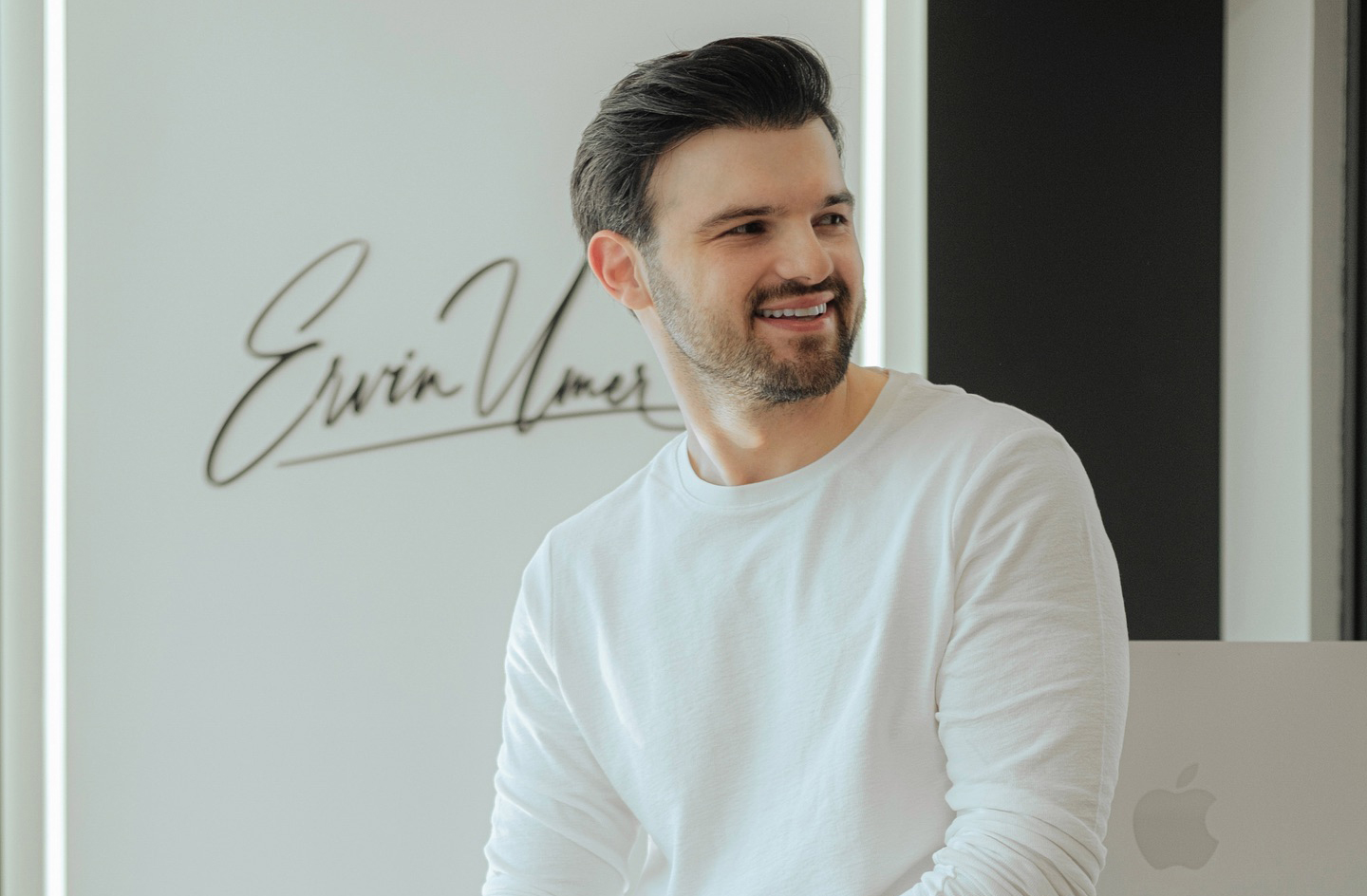
DSD is not just 'drawing teeth on a computer'. Dozens of parameters are measured, including facial symmetry, lip movement, gumline, midline, smile dynamics and even the sound structure that appears while speaking. At Livera Clinic, in our boutique studio in Florya, Istanbul, Dr. Ervin Umer and his team treat every DSD case like an engineering project: first measurement, then design, then the plan approved together with the patient, and finally the physical application.
In this guide we cover from scratch what DSD really means, which software (DSD App, Exocad, 3Shape) and hardware are used, how the mock-up process works, which treatments it can be combined with, how pricing is structured, and why Livera Clinic's boutique approach makes this process different.
The History and Evolution of DSD: From a Sketch to an Aesthetic Revolution
The concept of Digital Smile Design was first developed by the Brazilian aesthetic dentist Christian Coachman. In 2007, Coachman developed a simple technique by redrawing teeth with a digital pen on a PowerPoint presentation to show his colleagues. In a short time, this method went beyond being just a presentation tool and fundamentally changed the way dentistry plans treatment.
Today DSD has become a digital workflow that addresses not just the teeth but the face as a whole. Combined with CAD/CAM systems, 3D intraoral scanners, facial scanning cameras and 3D printers, a complete ecosystem emerges that turns the smile of your dreams into reality.
From Classical Aesthetic Planning to Digital
In the classical method, an aesthetic veneer or crown plan was based on the dentist's 'estimate'. A plaster impression was taken, models were poured, and the dentist and technician manually created tooth shapes on wax. The result was often beautiful, but the patient could not clearly see what outcome they would face before treatment began. DSD lifted this curtain of uncertainty.
How Is DSD Performed? Step-by-Step Clinical Process
Digital Smile Design is a much more layered protocol than it appears. The flow followed at Livera Clinic consists of six core stages, and every stage is carried out meticulously in our in-house digital laboratory.
1. Consultation and Expectation Analysis
The first appointment begins at the clinic or, for our international patients, with an online video call. Dr. Ervin Umer listens to the patient's aesthetic expectations, reference smile examples and lifestyle. Your profession, social life, photographs and even the smiles of celebrities you admire all guide the design. The polished, restrained smile of a lawyer is not the same design as the striking Hollywood Smile expectation of a performing artist.
2. Photo and Video Protocol
The foundation of DSD is image quality. A standard DSD protocol requires at least the following frames:
- Resting position photograph in a facial frame
- Natural smile photograph (E sound)
- Full smile photograph
- 12 o'clock view (bird's eye curve of upper teeth)
- Profile and 3/4 side profile frames
- Intraoral front and side views with retractors
- Speech video (15-30 seconds)
- Smile dynamics video
These videos are used to measure how the smile line moves dynamically, which tooth shows at which moment, and how many millimetres the upper lip rises. Static photography can be misleading; dynamic analysis tells you how the patient will actually look in real life.
3. 3D Intraoral Scan
At Livera Clinic we do not work with impression paste. With our 3Shape TRIOS class intraoral scanners, a digital copy of your teeth, gums and bite is taken with sub-millimetre accuracy. This scan:
- Eliminates the gag reflex caused by impression material
- Allows the design to be made with millimetric accuracy
- Reduces lab-clinician communication to a single digital file
- Is stored as a reference in case a restoration needs to be renewed in the future
4. Digital Design: The True Face of the Software
At this stage the data is transferred to the software and the real 'design' begins. Three main software layers work in Livera Clinic's in-house digital lab:
- DSD App / Smile Cloud: Used for smile composition, proportion analysis and patient presentation on a 2D photograph.
- Exocad DentalCAD: Preferred for the morphological design of teeth, crown form and the establishment of the occlusal relationship on the scan file.
- 3Shape Smile Design: A software solution highly regarded at clinical standards, integrating the facial photograph with the 3D dental model.
During the design, criteria such as the golden ratio (1.618), RED proportion (recurring esthetic dental proportion), smile arc curve, interincisal angle and gingival zeniths are applied one by one. The dentist mathematically harmonises the length, width and curvature of each tooth and its ratio to the others with your facial features.
5. Mock-up: Seeing Your New Smile in the Mirror
Perhaps the most beloved stage of DSD is the mock-up. The digitally designed smile is applied one-to-one in your mouth from a temporary composite material with the help of a 3D printer or silicone key. In approximately 30-60 minutes you see your new smile when you look in the mirror. At this stage:
- You test whether the tooth length is appropriate
- You evaluate how you feel while speaking
- You gather the opinions of your loved ones
- You take photographs to capture an outside perspective with your own eyes
If you wish, you can request changes. The design is revised until you say 'yes, this smile is mine'.
6. Production and Placement of the Permanent Restoration
Once the design is approved, the digital file is transferred directly to the in-house lab. According to your treatment plan, veneers, e-max, zirconia crowns or porcelain veneers are produced at the CAD/CAM bench. At the final bonding session the teeth are prepared, restorations are placed and occlusion is finely adjusted.
Software Used in DSD: Which Tool Does a Dentist Prefer and Why?
'Which software is it done with?' is one of the most frequently asked questions by patients planning digital smile design. Because each software has different capabilities and the right combination is essential for the right result.
DSD App
Developed by Christian Coachman's team, this mobile focused software allows quick design on a 2D photograph. Ideal for patient presentation, but not sufficient on its own for 3D production.
Exocad DentalCAD
A German origin, open architecture CAD software. The vast majority of digital labs worldwide use Exocad. Its Smile Creator module is extremely powerful in photo-scan matching.
3Shape Smile Design
The design software of the Danish origin 3Shape ecosystem. When used together with the TRIOS scanner, the digital workflow proceeds extremely fast and error free.
Which Software Is the Best?
In fact, there is no such thing as the 'best software'. Just as a painter uses different brushes, an experienced dentist selects the appropriate tool for each case. What matters is not the brand of the software but the aesthetic eye and clinical experience of the dentist using it.
Which Treatments Is DSD Applied To?
Digital Smile Design alone is not a treatment, it is a planning protocol. Once the design is approved, it is brought to life with the following treatments according to your needs.
Porcelain Laminate Veneers
These are thin porcelain shells of 0.3 to 0.7 mm thickness. They require minimal abrasion on the tooth, and light translucency is at the closest level to a natural tooth. When combined with DSD in patients with high aesthetic expectations, they give extraordinary results. For details you can take a look at our porcelain veneers page.
E-max Crown
These are all ceramic crowns produced from lithium disilicate. Ideal for those seeking both aesthetics and durability. For more information you can review our e-max crowns content.
Zirconia Crown
The optimal option for patients who need more extensive restoration or seek high durability in posterior teeth. All details are on our zirconia crowns page.
Hollywood Smile
The name of a comprehensive transformation in which 8-10 upper and 8-10 lower teeth are aesthetically redesigned. In our Hollywood Smile content we explain in detail how this process integrates with DSD.
Gum Aesthetics (Gummy Smile Treatment)
If your gums show too much when you smile, DSD analysis can predict in advance a laser gum contouring or a more comprehensive aesthetic gingivectomy plan.
Teeth Whitening and Bonding
For patients wanting minimal intervention, DSD is also used in planning composite bonding after a whitening session. Small touches in a single session create a big difference.
Facial Symmetry and the Golden Ratio: The Scientific Side of DSD
A beautiful smile is not a coincidence. In aesthetic dentistry, mathematical proportions are highly decisive. The DSD process visualises and measures these proportions.
The Golden Ratio (1.618)
When the ratio of the upper central incisor to the lateral incisor, and the lateral incisor to the canine, reaches the aesthetic golden ratio (approximately 1.618:1), the smile creates a 'naturally beautiful' perception.
Smile Arc
The lower edges of the upper incisors following the lower lip curve form the ideal smile line. DSD measures this arc to the millimetre and rebuilds it if necessary.
Midline
The alignment of the gap between the two upper central incisors with the midline of the face is the foundation of aesthetic balance. The middle of your face should be on the same line as the middle of your teeth.
Gingival Zeniths
The highest point the gum makes on each tooth is called the zenith. In canines, the zenith should be slightly higher than that of the incisors. DSD places this small detail at the centre of the design.
The Livera Clinic Difference: A Boutique Digital Dental Studio in Florya
Hundreds of clinics in Istanbul offer DSD services. So what sets Livera Clinic apart? Let us address this point by point.
In-House Digital Laboratory
Many clinics send the design to an external lab and have the production carried out at another facility. With us the whole process is under one roof. Our 3D intraoral scanner, CAD/CAM bench, 3D printer and mock-up production unit are all in the same building. Thanks to this:
- The clinician and the technician speak in the same room
- Design revisions are made within hours, not days
- Colour selection is made under the same lighting conditions, without needing to be sent to the lab via photographs
Dr. Ervin Umer and Aesthetic Vision
Our founder, Dr. Ervin Umer, has years of experience in aesthetic dentistry and digital workflows. He offers the profile of a clinician who designs smiles not only technically but also in terms of art and proportion.
Free DSD: A Gift With Your Treatment
At many clinics, an independent DSD analysis is charged between £500 and £1,500. These figures are standard in the United Kingdom market. At Livera Clinic, DSD is offered free of charge to all our patients receiving veneers, crowns or Hollywood Smile treatment. This way our patients first see their new smile and then decide on treatment.
Boutique Atmosphere: Dentistry With Piano Accompaniment
Our lounge area inside the clinic, which features a real piano, offers our patients the feeling of a calm boutique, not a factory style dental clinic. A patient with a low level of anxiety makes more accurate decisions.
5 Star Hotel and VIP Transfer
For our patients coming from abroad, the entire transfer process and 5 star hotel accommodation are included in the package. Every detail is considered from the moment you land in Istanbul until your return.
2 Year Guarantee
We keep our aesthetic restorations under a 2 year production and application guarantee. If any technical issue arises during this period, we resolve it free of charge.
Digital Smile Design Prices
DSD pricing varies significantly from country to country and from clinic to clinic. The table below offers a comparative reference.
| Location / Clinic | Independent DSD Analysis | With Treatment |
|---|---|---|
| United Kingdom (average) | £500 - £1,500 | Usually charged separately |
| Continental Europe (Germany, Netherlands) | €400 - €1,200 | Usually charged separately |
| Turkey (average private clinic) | 2,000 - 6,000 TL | Included at some clinics |
| Livera Clinic (Florya) | Optional analysis fee | FREE for patients receiving veneers / crowns / Hollywood Smile |
The vast majority of aesthetic clinics in the United Kingdom position DSD as a separate service and request an analysis fee before treatment begins. The advantage of boutique clinics in Turkey is that digital lab investment is reflected in more flexible pricing. Livera Clinic stands out by offering DSD completely free to patients who choose aesthetic treatment packages.
How Long Does the DSD Process Take?
The process varies depending on the patient's treatment plan. A typical Livera Clinic flow is as follows:
- Day 1: Consultation, photo-video protocol, 3D scan
- Days 2-3: Digital design, preparation of simulation on photo
- Days 3-4: Mock-up application, design approval
- Days 4-7: Tooth preparation, temporary restoration
- Days 7-10: Final bonding session, check-up
The vast majority of our international patients complete the entire process in a 7 to 10 day visit to Istanbul. Additional travel may be required for complex cases (with implant integration, orthodontic support).
Who Is DSD Suitable For, and Who Is It Not Suitable For?
Digital Smile Design is suitable for most adult patients. However, as with any treatment, caution is needed in certain situations.
Ideal Candidates for DSD
- Those with mismatches in tooth colour, shape or size
- Patients with an irregular smile line
- Those experiencing tooth gap issues
- Those with worn, broken or old restorations on their teeth
- Those with high aesthetic expectations who want to see the result before treatment
- Patients with asymmetric gum levels
- Those who feel their smile is in the foreground because of their profession (stage performer, presenter, sales professional)
Situations Requiring Caution
- People with active gum disease need periodontal treatment first
- In the presence of advanced decay, the restorative part of the treatment plan takes priority
- In severe jaw joint (TMJ) disorders, joint evaluation is essential
- In cases of bruxism (teeth grinding), a night guard plan is made
- During active orthodontic treatment, DSD may be postponed to the end of treatment
Life After DSD: Caring for Your New Smile
Once the smile is designed and applied, care responsibility is in your hands. The good news is: with proper care, your restorations preserve their aesthetic and functional qualities for many years.
Daily Care Routine
- Brushing twice a day with a soft bristled toothbrush
- Use of dental floss or water floss (especially at veneer edges)
- Preference for fluoride toothpaste
- Staying away from abrasive (whitening type) toothpastes
Diet and Habits
- Avoid excessively hot or cold foods for the first 48 hours
- Do not bite hard shelled foods with the front teeth (nuts, bones)
- Quit habits such as nail biting and pen chewing
- Keep coffee, tea and red wine consumption moderate (porcelain does not stain, but composite cement may be affected over time)
Periodic Check-ups
We recommend visiting Livera Clinic every 6 months for professional cleaning and restoration check-up. For our international patients, online video follow-up is also available.
Differences Between DSD and Traditional Aesthetic Planning
When we put the two methods side by side, the advantages digital provides clearly stand out.
| Criterion | Traditional Method | Digital Smile Design (DSD) |
|---|---|---|
| Previewing the result | Limited to wax model, depends on imagination | One-to-one image with photo and mock-up |
| Facial symmetry analysis | Clinician's eye, manual measurement | Millimetric analysis with software |
| Patient-clinician communication | Verbal explanation | Visual presentation, shareable simulation |
| Revision flexibility | Limited, model has to be re-cast | Design changes within minutes |
| Production precision | Depends on manual technician skill | Standard precision with CAD/CAM |
| Archiving | Physical models must be stored | Digital file kept in the cloud |
Livera Clinic DSD Package for International Patients
For our patients from the United Kingdom, Germany, the Netherlands, Belgium and Scandinavian countries, the DSD process is not just an in-clinic service. We offer a fully integrated concept.
Travel and Accommodation
- VIP vehicle transfer from Istanbul Airport
- 5 star hotel accommodation
- Daily transfers between clinic and hotel
- City tour suggestions (for days between treatment sessions)
Online Process Before Treatment
Before coming to Istanbul, you can receive a preliminary analysis by sharing your photographs via email or WhatsApp. Dr. Ervin Umer's team holds an online video call with you and presents an estimated treatment plan. You can request an appointment from our contact page.
Frequently Asked Questions (FAQ)
1. Does Digital Smile Design hurt?
The design stage itself is completely painless. Photography, 3D scanning and mock-up application are comfortable sessions. Local anaesthesia is applied during the actual restoration stage (veneers, crowns) and you do not feel any pain.
2. Will the DSD analysis match the actual result?
The design you approve during the mock-up stage forms the basis of the permanent restoration. The result is very close to the design, but there may be small tissue and colour differences due to the natural light translucency of the material. This difference is usually perceived positively, as a more natural result.
3. Is the free DSD analysis really included?
Yes. At Livera Clinic, the DSD process is included free for all patients receiving veneers, e-max crowns, zirconia crowns or Hollywood Smile treatment. Only for patients requesting an independent DSD analysis, a separate service fee may apply.
4. What happens if I do not like the design?
The design does not move to a permanent application without your approval. You can request as many revisions as you wish, both at the digital simulation stage and at the mock-up stage. No permanent change is made to your teeth without your approval.
5. How much tooth reduction (preparation) is required?
For laminate veneers, between 0.3 and 0.7 mm, slightly more for an e-max crown, and approximately 1 to 1.5 mm for a zirconia crown depending on the condition of the tooth. Thanks to DSD planning, no unnecessary reduction is made and only the space required by the restoration is opened.
6. Are DSD and Hollywood Smile the same thing?
No, they are different concepts. DSD is a planning method, Hollywood Smile is a result. Hollywood Smile is usually planned with DSD, but every DSD case does not have to be a Hollywood Smile. For detailed information you can review our Hollywood Smile page.
7. How many years do the restorations last?
With proper care, porcelain laminate veneers last 10-15 years, e-max crowns 10-15 years, and zirconia crowns 15-20 years or more. At Livera Clinic all restorations are under a 2 year guarantee.
8. I am coming from abroad, how many days do I need to stay in Istanbul?
For a standard veneer or crown case, a 7 to 10 day visit is sufficient. The duration may be longer for more comprehensive treatments (implant + aesthetic). During your treatment plan Dr. Ervin Umer will provide you with a clear schedule.
9. Do you keep the design file?
Yes. All your 3D scan and design files are stored in our clinic cloud system. If a restoration needs to be renewed in the future or a new treatment is planned, these files are taken as a reference.
10. Can I show a smile example from social media and say 'I want it like this'?
Yes, sharing a reference smile is very helpful for us. However, instead of copying the reference one-to-one, a design adapted to your facial features is made. Because someone else's smile may not create the same aesthetic effect on your face. Dr. Ervin Umer analyses the reference in every case and builds the most suitable version for you.
11. Can the DSD process be done on its own?
Yes. Some patients prefer to have an independent DSD analysis just to see the possible result without yet deciding on treatment. In this case the analysis is charged as a separate service. If you then decide to proceed with treatment, the entire analysis fee is deducted from the treatment package.
12. Is there an age limit?
DSD is generally applied to patients aged 18 and over. Because aesthetic restorations made before jaw development is complete can become incompatible over the years. There is no upper age limit, it can be applied at any age as long as oral and general health are suitable.
13. Is the online consultation charged?
No. Our first online meeting is completely free. You share your photographs, Dr. Ervin Umer provides you with a preliminary analysis and estimated treatment plan. You can easily schedule an appointment from our contact page.
Conclusion: Designing Your Smile Is No Longer a Dream
Once upon a time, aesthetic dental treatment was based on the idea 'trust the dentist, you will see the result when it appears'. Digital Smile Design has consigned this approach to history. Now you can see, touch and photograph your new smile before treatment begins.
At Livera Clinic Florya, with our in-house digital laboratory, Dr. Ervin Umer's aesthetic vision and our boutique clinic atmosphere, we transform the DSD process from a routine service into a personalised experience. Moreover, we offer DSD free of charge to all our patients receiving veneers, e-max crowns, zirconia crowns or Hollywood Smile treatment, and provide end-to-end service with a 2 year guarantee, 5 star hotel accommodation and VIP transfer.
If you are ready to design your new smile, get in touch with us from our contact page. Share your photographs, schedule our online meeting and meet your new smile on your screen. The Livera Clinic team takes care of everything else for you.