






Contentsexpand_more
- Dental Implants: The Permanent Solution Closest to a Natural Tooth
- What Is a Dental Implant? The Anatomy of an Artificial Tooth Root
- When Is Dental Implant Treatment Used?
- Types of Implants: Which System Is Right for You?
- Implant Brands: What Does Each System Promise?
- Candidate Criteria for an Implant
- When Are Bone Grafting and Sinus Lifting Required?
- Implant Treatment Process: Step by Step, What Happens?
- Is Same-Day Implant (Immediate Loading) Possible?
- The Difference of Implant Treatment at Livera Clinic
- Implant Prices: Turkey vs UK Comparison
- Recovery and Care After Implant
- Implant Failure: Risks and Precautions
- Frequently Asked Questions
- The Right Step Before Starting Treatment
Dental Implants: The Permanent Solution Closest to a Natural Tooth
Losing a tooth affects far more than just the appearance of your mouth. It changes your chewing habits, the way you speak, and even the symmetry of your facial features. Placing an artificial root in the gap left by a missing tooth is no longer a complex dream, it is a routine procedure that advances day by day through digital planning. Dental implant treatment is one of the most reliable solutions in modern dentistry, restoring both function and aesthetics with titanium roots that replace your lost teeth.
At Livera Clinic, our boutique practice in Florya, Istanbul, we plan every implant case down to the millimetre with 3D CBCT scanning under the leadership of founding dentist Dr. Ervin Umer. We use world-standard implant systems such as Straumann, Nobel Biocare and MIS, and deliver your treatment with a 2-year clinic warranty. We welcome our international patients with 5-star hotel accommodation and VIP transfer, offering a process where you will not have to worry about anything outside the clinic.
What Is a Dental Implant? The Anatomy of an Artificial Tooth Root
A dental implant is a small screw-like component made of biocompatible titanium alloy that replaces the root of a lost natural tooth. It is surgically placed into the jawbone and, within a few months, fuses with the bone to become an artificial root. This fusion process is called osseointegration and forms the foundation of modern implantology.
An implant treatment has three main components:
- Implant body (screw): The titanium part placed in the jawbone. It is usually 3.5 mm to 5 mm in diameter and 8 mm to 14 mm in length.
- Abutment: The connector piece that links the implant to the upper prosthesis. It can be made of titanium or zirconia.
- Crown (upper structure): The visible, chewing part that the patient sees. It can be zirconia, E-max or metal-supported porcelain.
This three-part structure mimics the natural tooth's trio of root, dentin and enamel. When correctly planned, it lasts more than 20 years, and in many patients it can be used for a lifetime.
When Is Dental Implant Treatment Used?
Implants are now used across a very wide range of indications, not just for single tooth loss. The cases we most often encounter can be listed as follows:
- Single tooth loss (after accident, decay, root fracture)
- Multiple adjacent missing teeth (implant-supported bridge)
- Fully edentulous jaw (All-on-4 or All-on-6 fixed prosthesis)
- Patients tired of using removable dentures
- Those who do not want to file down healthy adjacent teeth for a bridge
- Patients with bone loss after trauma or tumour surgery
A situation we frequently encounter in practice is patients turning to implants only after living with removable dentures for years and realising they cannot eat properly. Yet intervening before bone resorption begins greatly reduces both the timeline and the cost.
Types of Implants: Which System Is Right for You?
There is no single "implant", different protocols come into play depending on the patient's number of missing teeth and bone condition. Let us explain the treatment types most commonly used in clinical practice.
Single Tooth Implant
This is the most conservative and long-lasting solution for the loss of a single tooth. A single screw is placed into the jawbone, and after 3-6 months of osseointegration, a zirconia or E-max crown is fitted on top. The neighbouring teeth are left untouched, which is an important advantage for both aesthetics and health in the future.
Implant-Supported Bridge (Multiple Teeth)
For patients missing three or four adjacent teeth, placing a 3-4 tooth bridge on 2 implants instead of a separate implant for each gap reduces both the cost and the surgical burden. When chosen for the aesthetic zone, the results are very close to natural.
All-on-4 Implant System
This is a method of creating a fully fixed prosthesis for an entire arch with just 4 implants in a fully edentulous jaw. Two implants are placed vertically in the front region, and two implants are placed at an angle (35-45 degrees) in the back region. Thanks to this angled placement, sinus lifting or bone grafting is mostly not required. It is a saving technique for patients who have suffered bone loss. It is possible for the patient to leave the clinic with teeth the same day, using a temporary prosthesis.
All-on-6 Implant System
We can call it the stronger sibling of All-on-4. Six implants are placed instead of four, the chewing force is distributed over a wider area, and the prosthesis becomes biomechanically more balanced. It is preferred for patients who frequently consume hard foods, have relatively good bone structure and prioritise long-term durability. With proper care, a service life exceeding 15 years is expected.
Full Mouth Rehabilitation
If there is complete edentulism in both the upper and lower jaws, the entire mouth is resolved in a single treatment plan with a double All-on-4 or All-on-6 protocol. A significant portion of our international patients are full mouth cases, and the process is planned as a first visit of 5-7 days plus a second visit after osseointegration.
Implant Brands: What Does Each System Promise?
The brand of the implant affects many things, from surface technology to long-term success rates. At Livera Clinic, we work only with internationally approved brands that have a broad clinical database.
Straumann (Switzerland)
It is referred to as the "Rolls Royce" of the premium segment. Thanks to its patented SLActive surface technology, the osseointegration period can drop from 3 months to 3-4 weeks. It is the brand we prefer for patients who smoke, have diabetes or have borderline bone density. The Roxolid alloy combines the strength of titanium and zirconium.
Nobel Biocare (Sweden/Switzerland)
It is the brand that introduced the All-on-4 concept to the world and is still cited as a reference in this field. With its TiUnite surface technology and wide range of abutment options, it stands out especially in full mouth rehabilitations.
MIS (Israel / Germany)
It is one of the strongest mid-premium brands in terms of price-quality balance. With its European-standard manufacturing, broad range of prosthetic components and affordable cost, it is used confidently in many cases.
Osstem and Implance as Other Options
Osstem is of Korean origin and is one of the most placed implant brands in the world. Implance, although produced in Turkey, holds European CE certification and has an acceptable success rate. It offers a reasonable alternative for patients with limited budgets. Your bone structure, systemic condition and expected healing time determine which brand is suitable for you.
Candidate Criteria for an Implant
"Am I suitable for an implant?" is one of the most frequent questions we hear at the first examination. The answer is individual, but there are some basic criteria:
- Sufficient bone density and volume: A certain bone thickness is required for the implant to be held stably. If missing, a graft or sinus lift comes into play.
- Healthy gums: If there is active gum disease (periodontitis), it must be treated first.
- General health: Uncontrolled diabetes, being in cancer treatment and using heavy osteoporosis medications are risk factors.
- Smoking: Not forbidden, but reduces the success rate. It is recommended to stop smoking for at least 2-4 weeks before and after treatment.
- Age: There is no upper limit. It can be applied to anyone over 18, by which time jaw development is complete.
At our clinic in Florya, we first put every new patient through a detailed consultation, then map the bone with a 3D CBCT scan. The data makes the decision, not assumption.
When Are Bone Grafting and Sinus Lifting Required?
If tooth loss is left untreated for a long time, the jawbone in that area begins to resorb because it is not used. An example we often give our patients is this: bone is just like muscle, if you do not use it, you lose it.
Bone grafting (bone powder) is the addition of biomaterial that supports the bone structure into the deficient area. Within a few months, the body replaces this material with its own bone, and a sufficient base for the implant is created.
Sinus lifting is applied when the sinus cavity in the upper back jaw region sags downward and the bone height is insufficient. The sinus membrane is lifted upward and a graft is added to the gap between. This procedure can be performed in the same session as implant surgery or beforehand.
Thanks to the angled implant placement technique, the All-on-4 protocol eliminates the need for these additional procedures in most cases. This significantly reduces both the time and the cost.
Implant Treatment Process: Step by Step, What Happens?
The treatment is a structured process from the first consultation to the delivery of the permanent crown. The typical flow at Livera Clinic works as follows:
1. Consultation and Initial Examination
Intraoral examination, taking medical history and photography. The patient's expectations are clearly listened to, and alternative treatment options are placed on the table.
2. 3D CBCT Scan
A three-dimensional image of the jaw is taken with low-dose radiation. Bone density, sinus position and nerve line are analysed to the millimetre. Modern implantology cannot be considered without this data.
3. Digital Planning
The angle, depth and size at which the implant will be placed are planned in special software. If necessary, a surgical guide is produced, so the margin of error in the operation drops to the millimetre.
4. Surgical Placement
Under local anaesthesia, it is a procedure that lasts 30-60 minutes for most patients. The duration is longer for multiple implants. The patient leaves the clinic walking after the operation. Mild swelling and tenderness on the first day are normal.
5. Osseointegration Process
The fusion of the implant with the jawbone takes 2-3 months in the lower jaw and 3-6 months in the upper jaw. During this period, a temporary prosthesis or a temporary crown for the aesthetic zone may be applied to patients.
6. Abutment and Impression
When osseointegration is complete, the abutment is placed on the implant and a digital impression is taken. After this stage, the laboratory process begins.
7. Placement of the Permanent Crown
The permanent crown, produced according to the patient's tooth colour, facial features and smile line, is placed. A properly planned implant crown is indistinguishable from the other teeth in your mouth.
Is Same-Day Implant (Immediate Loading) Possible?
In some cases, it is possible to place a temporary fixed prosthesis on the implant the same day it is placed. Especially in the All-on-4 protocol, if the primary stability of the 4 implants is sufficient, the patient leaves the clinic with teeth. This is called the "teeth in a day" concept.
However, it is not suitable for every patient. If bone density is insufficient, smoking is heavy or systemic risk factors exist, the classical protocol is safer. The decision is made by evaluating clinical findings and CBCT data together.
The Difference of Implant Treatment at Livera Clinic
There are thousands of clinics performing implants in Turkey. So what makes Livera Clinic different?
- Boutique clinic approach: We accept a limited number of patients per day. You are not put in a queue, we allocate days, not hours, to your case.
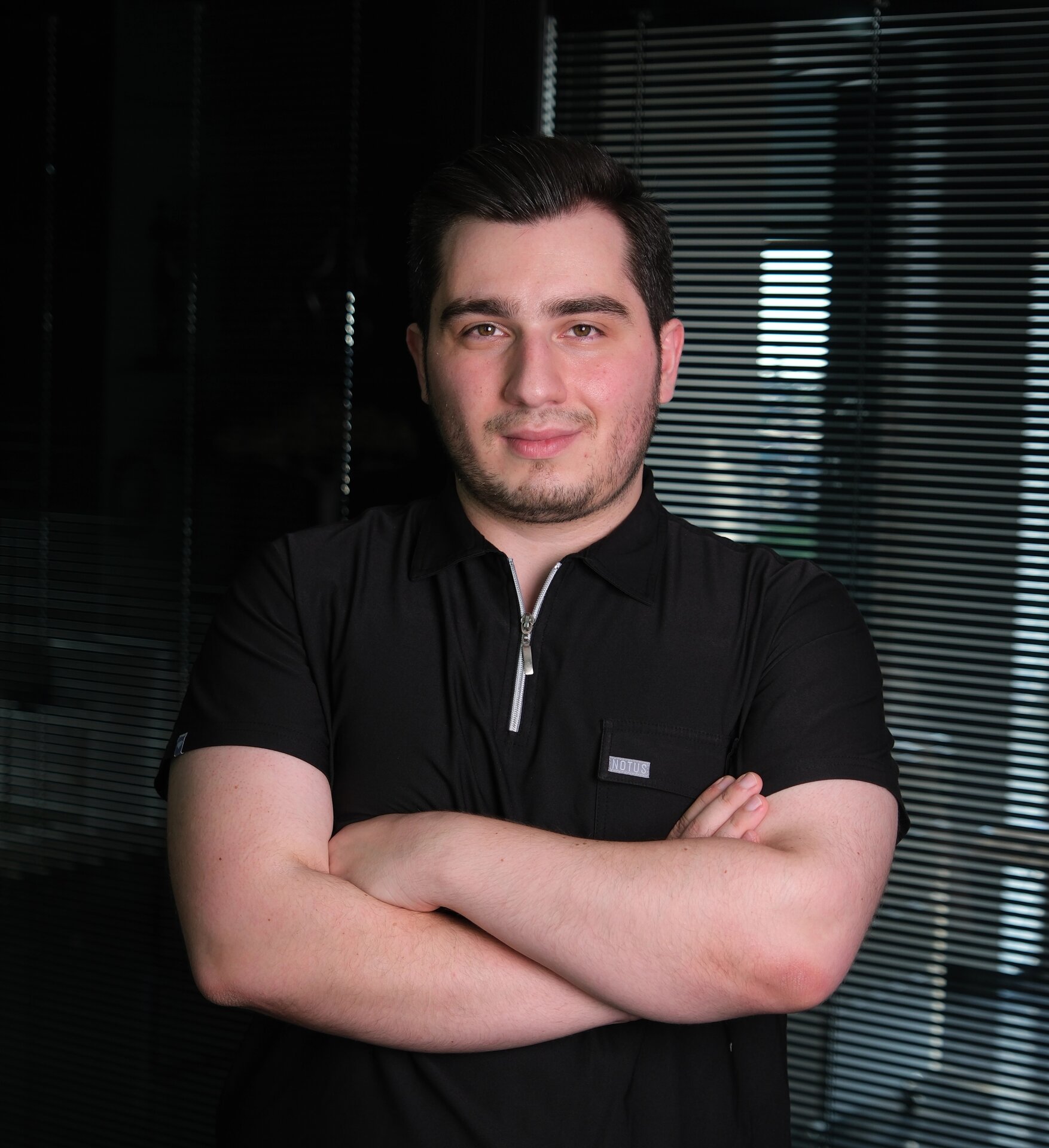
- Founder Dr. Ervin Umer: All implant cases are planned and performed directly by the team of the clinic's founder.
- 3D CBCT planning: In-clinic tomography device. We work with imaging, not estimation.
- Premium brands: Straumann, Nobel Biocare, MIS. Selection according to your preference, all brand certificates are delivered to you.
- 2-year clinic warranty: The technical elements of your treatment are covered for 2 years.
- 5-star hotel + VIP transfer: Accommodation and airport transfer are included in the package for international patients.
- Florya location: A peaceful boutique area close to Istanbul Airport, on the coastal axis, with a sea view.
Once your treatment is complete, we can integrate the implant crowns with aesthetic restorations such as zirconia crowns or E-max crowns. For those seeking a full smile design, it is also possible to include the implant in the Hollywood Smile protocol.
Implant Prices: Turkey vs UK Comparison
Price is the topic our international patients are most curious about. Let us speak plainly: Turkey is one of the few countries offering serious cost advantage without compromising quality. Lower labour costs, the currency advantage and intense competition make this possible.
| Treatment | Livera Clinic / Turkey (£) | UK Reference (£) | Savings |
|---|---|---|---|
| Single tooth implant (starting) | £180 | £2,000 - £3,000 | 90%+ |
| All-on-4 (per jaw) | £2,850 | £10,000 - £15,000 | 70-80% |
| All-on-6 (per jaw) | £3,200 | £12,000 - £18,000 | 70-80% |
| Full Mouth (both jaws All-on-4) | £5,700 | £20,000 - £30,000 | 70-80% |
These prices include the implant body, abutment and standard zirconia crown. If a premium superstructure is preferred (E-max, Straumann SLActive), the price is clarified with additional information. Hotel accommodation and transfer are within the package, there are no hidden costs.
Recovery and Care After Implant
Implant surgery has been reduced to minimal trauma with modern technique. Most patients return to their normal life the next day. Still, following some rules is important to speed up the recovery process:
- Avoid hot drinks and hard foods in the first 24 hours
- Cold application in the first 48 hours reduces swelling
- Stay away from smoking and alcohol during the first week
- Take the prescribed antibiotics and painkillers regularly
- Do not stop brushing your teeth, just do not touch the operation area for the first 3 days
- Come to the clinic on day 10 for a suture check
In the long term, regular tooth brushing, interdental brushes and check-ups twice a year are sufficient. Implants do not decay, but if the gums around them are neglected, an inflammatory condition called "peri-implantitis" may develop. Therefore, care must become a lifelong habit.
Implant Failure: Risks and Precautions
In properly planned implant treatments, the success rate is around 95-98%. Still, in order to inform our patients transparently, we want to talk openly about the risks. The most common reasons for early failure are:
- Insufficient osseointegration (lack of fusion with bone)
- Post-operative infection
- Smoking and uncontrolled diabetes disrupting healing
- Insufficient primary stability
Late-term (after 1 year) failure is usually due to peri-implantitis, overloading or lack of hygiene. CBCT planning and the use of premium brands bring early-term risks close to zero. The patient's diligence is the main determinant of long-term success.
Frequently Asked Questions
Is implant treatment painful?
Since the surgical operation is performed under local anaesthesia, you do not feel pain during the procedure. After the operation, mild tenderness may occur for 1-2 days, and the prescribed painkillers easily control this. The vast majority of patients comment that it "was more comfortable than a tooth extraction".
In how many days is implant treatment completed?
The surgical placement is completed in a single session, in 30-90 minutes. However, the osseointegration (fusion with bone) process takes 2-6 months. The permanent crown is fitted at the end of this period. For our international patients, the first visit is planned as 5-7 days and the second visit as 3-5 days.
Is my implant guaranteed?
At Livera Clinic, we provide a 2-year clinic warranty on all implant treatments. The international lifetime manufacturer warranty of the implant brands used (Straumann, Nobel Biocare) is also valid separately.
I smoke, can I have an implant?
Yes, but to preserve the success rate, we recommend that you stop smoking at least 2 weeks before treatment and 4 weeks after. Smoking severely disrupts the osseointegration process and increases the risk of peri-implantitis in the long term.
I have diabetes, can I have an implant?
Controlled diabetes (HbA1c value below 7) is not an obstacle for implants. In uncontrolled diabetes, you must first stabilise your blood sugar with your internal medicine doctor. We evaluate your medical history in detail at the first examination.
I have bone loss, can I have an implant?
In most cases, yes. Thanks to bone grafting, sinus lifting or the angled implant technique of the All-on-4 protocol, treatment is possible even in patients with severe bone loss. Your 3D CBCT scan clarifies this decision.
How many years does an implant last?
A properly planned, premium brand implant can be used for 20-25 years with proper care, even for a lifetime. The upper crown part may need to be renewed every 10-15 years due to wear or aesthetic reasons, but the implant body remains in place.
Which is better, All-on-4 or All-on-6?
Instead of asking "which is better", you should ask "which is more suitable for you". If your bone structure is limited and you want a quick result, All-on-4 stands out. If bone support is good and long-term durability is your priority, All-on-6 is preferred. CBCT data and clinical examination together make the right decision.
Can teeth be fitted on the same day?
In suitable cases, yes. Especially in the All-on-4 protocol, if the primary stability of the implants is sufficient, you leave the clinic with a temporary fixed prosthesis the same day. The permanent prosthesis is fitted after osseointegration.
Is there an age limit for implants?
There is no upper limit. Anyone over 18, when jaw development is complete, can be a candidate. We have healthy patients to whom we have placed implants at the age of 80.
What can I eat after the implant?
For the first 24 hours, warm and soft foods (soup, puree, yoghurt). Avoid hard, hot and spicy foods in the first week. After day 10, you gradually return to a normal diet. Once the permanent crown is fitted, you can eat anything comfortably.
Will the implant fall out?
Once osseointegration is successful, the implant body falling out is extremely rare. If fusion with the bone has not been achieved, it becomes apparent within the first few months and the implant can be replaced. This occurs in 2-5% of cases and is covered by warranty at Livera Clinic.
Can I have an MRI?
Yes. Titanium implants are MRI-compatible and do not affect image quality. They also do not trigger alarms at airport security gates.
What is included in the implant price?
At Livera Clinic, our package price includes the implant body, abutment, standard zirconia crown, 3D CBCT scan, all surgical procedures and check-ups. For international patients, 5-star hotel accommodation and VIP transfer are also added to the package. If additional surgery (graft, sinus lifting) is required, we provide transparent information after the examination.
In which languages can I communicate at the clinic?
We have coordinators who speak Turkish, English, German and Arabic. A dedicated patient consultant is assigned to you throughout your treatment.
The Right Step Before Starting Treatment
The implant decision is an investment, both physically and financially. Who you make this investment with, what materials are used and what plan is followed will determine the next 20 years. At our boutique clinic in Florya, Dr. Ervin Umer and his team plan every case individually and stay by your side after treatment.
For a detailed consultation and a free treatment plan, meet Dr. Ervin Umer or contact us directly. If you share your CBCT scan, we can offer a remote preliminary assessment and price quote. We are at the right time to bring your smile back as close as possible to natural teeth.
Sources: Straumann Group clinical database, Nobel Biocare All-on-4 protocol guide, 2026 Turkey implant price analyses.